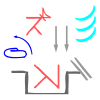
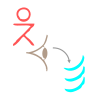
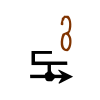
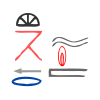
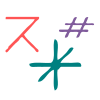
 corpulence
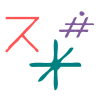 big (2)
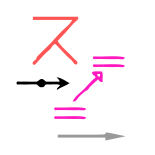 grow up
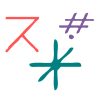 thin (2)
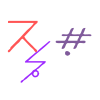 tired
tired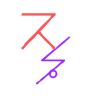 energy (2)
 growth
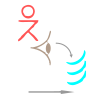
EN: The baby is crying.
FR: Le bébé est en train de pleurer.
ZH: 宝宝哭了。 (Bǎobǎo kūle.)
JA: 赤ちゃんが泣いています。 (Akachan ga naite imasu.)
EO: La bebo ploras.

A new way of re-presenting

EN: body
FR: corps
ZH: 身体 (shēntǐ)
JA: 体 (karada)
IT: corpo
DE: Körper
ES: cuerpo
RU: те́ло (télo)
EO: korpo
 back
back  belly
belly  bone
bone  brain
brain  buttock
 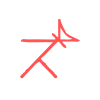 dirt
dirt 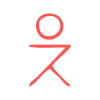 head
head  face
face 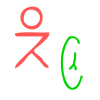 ear
ear 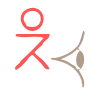 eye
eye  mouth
mouth 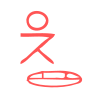 tooth
tooth  nose
nose  health
 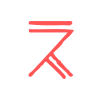 limb
limb 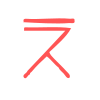 arm
arm  hand (2)
 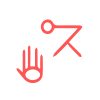 finger
  shoulder
  leg
leg 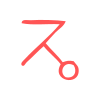 foot
foot  knee
knee  nerve
nerve 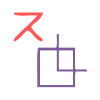 organ
organ  blood
blood  intestine
 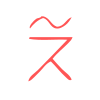 sense
sense 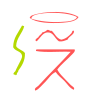 flavour
  fat
fat  salt
salt  sugar
sugar  sex
sex 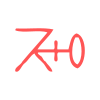 female sex
  male sex
 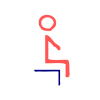 sit
sit  skin
skin 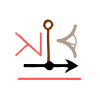 sleep
sleep  dream
dream 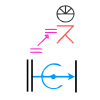 adult
adult baby
baby coming of age
 corpse
 pregnant
 marsupial
 color
color find
find hand
hand take
take X-ray
X-ray toilet
 sidewalk
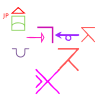 aikido
 sport
sport wrestling
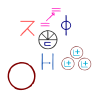 education (3)
 education (2)
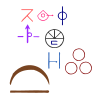 education (5)
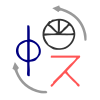 perception
 skill
skill anger
anger balance
 courage
 dignity
 laugh
laugh violence
 effort
 effort (mind)
 practice
 armor
armor puppet theatre



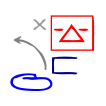
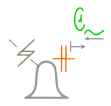
EN: Plug one's ears while stealing a bell.
FR: Se couvrir les oreilles et voler la cloche.
ZH: 掩耳盗铃。 (Yǎn’ěr-dàolíng.)
EO: Kovru viajn orelojn kaj ŝtelu la sonorilon.
[ZH] – A chengyu. Refers to the story of a thief who thought that a large bell was too heavy and had to be broken to bits if he wanted to get it back home. Finding a sledgehammer, he swung at the bell with all his might and, of course, a huge gong rang out. He eventually covered his ears not to listen at this sound anymore. And was quite satisfied with this, until people came in great numbers… / Meaning « burying one’s head in the sand ». ([FR]: se tromper soi-même, se mentir à soi-même)
WIVIWIC: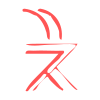



EN: One hair from nine oxen.
FR: 9 vaches, un poil.
ZH: 九牛一毛。 (Jiǔ niú yī máo.)
EO: 9 bovinoj, unu hararo.
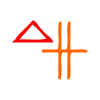
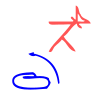


EN: May I wash my hands?
FR: Puis-je me laver les mains ?
ZH: 我可以洗个手吗? (Wǒ kěyǐ xǐ gè shǒu ma?)
JA: 手を洗ってもいいですか。 (Te o aratte mo īdesu ka.)
IT: Posso lavarmi le mani?
DE: Darf ich mir die Hände waschen?
ES: ¿Puedo lavarme las manos?
EO: Ĉu mi povas lavi miajn manojn?
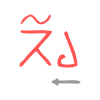
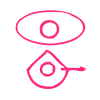
EN: It smells good.
FR: Ça sent bon.
ZH: 闻起来很香! (Wén qǐlái hěn xiāng!)
JA: いいにおいがする。 (Ī nioi ga suru.)
IT: Ha un buon odore.
DE: Es riecht gut.
ES: Huele bien.
EO: Ĝi odoras bone.
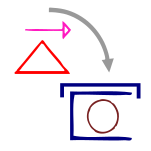



EN: If your head is intact, you can have a thousand turbans.
FR: Si votre tête est intacte, vous pouvez avoir un millier de turbans.
HI: सर सलामत, तो पगड़ी हज़ार (Sar Salamat, to pagdi hazaar.)
EO: Se via kapo estas sendifekta, vi povas havi mil turbanojn.
[HI] – Meaning « In troubled times, save your head first, your possessions should not be your priority. You can buy worldly things anytime later.)
WIVIWIC:
 /
/