 again (2)
 day
day eternity
 frequency
 afrequency
 again
again when (2)
 bloom
bloom growth
 keep
keep fossile
 spacetime
 walk (4)
 archive
 trust
trust plan
plan project
 fashion
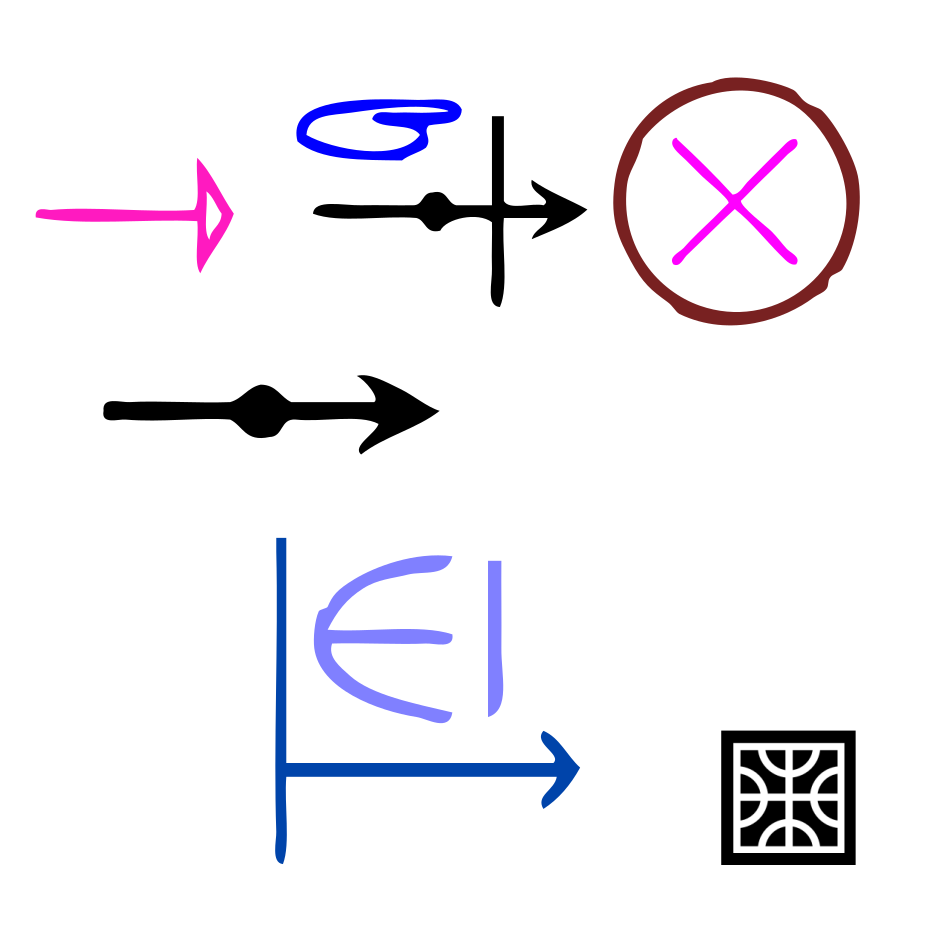 TEDx-22-10-2025-3

EN: When does the train leave?
FR: Quand part le train ?
ZH: 火车什么时候开? (Huǒchē shénme shíhòu kāi?)
JA: いつ電車は出発しましたか? (Itsu densha wa shuppatsu shimashita ka?)
EO: Kiam la trajno foriras?

A new way of re-presenting
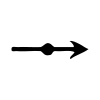
EN: time
FR: temps
ZH: 时间 (shíjiān)
JA: 時間 (jikan)
IT: tempo
DE: Zeit
ES: tiempo
RU: вре́мя (vrémya)
EO: tempo
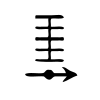 date
date  calendar
 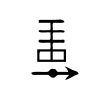 day (2)
 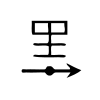 hour
hour  minute
  second
 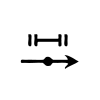 moment
  after
after  before
  early
early 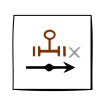 delay
delay  late
late 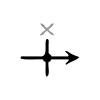 now
now 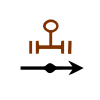 punctual
 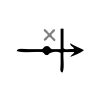 soon
soon 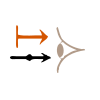 wait
wait 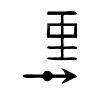 month
month  present
  future
 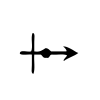 past
past  season
  autumn
 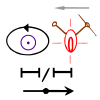 spring
 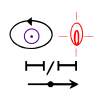 summer
 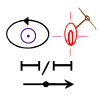 winter
 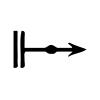 start
start  change
 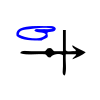 become
 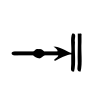 finish
 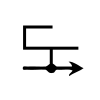 when (3)
 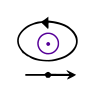 year
year 
EN: What year is it?
FR: En quelle année sommes-nous ?
ZH: 现在是哪一年? (Xiànzài shì nǎ yī nián?)
JA: 今は何年ですか? (Ima wa nan'nendesu ka?)
EO: Kiu jaro estas?

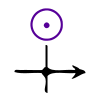
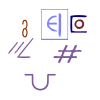
EN: What the weather like today?
FR: Quel temps fait-il aujourd'hui ?
ZH: 今天天气怎么样? (Jīntiān tiānqì zěnme yàng?)
JA: 今日の天気はどうですか ? / 今日の天気は? (Kyō no tenki wa dōdesu ka? / Kyō no tenki wa?)
IT: Com’è il tempo oggi? / Che tempo fa oggi?
DE: Wie ist das Wetter heute?
ES: ¿Qué tiempo hace hoy?
EO: Kia vetero estas hodiaŭ?

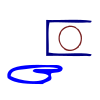

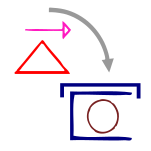

EN: This computer has a three-year warranty.
FR: Cet ordinateur a une garantie de trois ans.
ZH: 这台电脑有三年的保证期。 (Zhè tái diànnǎo yǒu sān nián de bǎozhèngqī.)
JA: このコンピュータは 3 年保証だ。 (Kono konpyūta wa 3-nen hoshō da.)
IT: Questo computer ha una garanzia di tre anni.
DE: Für diesen Computer gilt eine dreijährige Garantie.
ES: Este ordenador tiene una garantía de tres años.
EO: Ĉi tiu komputilo havas trijaran garantion.

EN: There is a meeting at ten.
FR: Il y a une réunion à dix heures.
ZH: 十点开会。 (Shí diǎn kāihuì.)
JA: 10時に会議があります。 (juu-Ji ni kaigi ga arimasu.)
EO: Estas kunveno je la deka.